Can DeepSeek generate images? DeepSeek’s official chat and API materials describe text work and, for supported models, image input for visual understanding. They do not establish a general public text-to-image output workflow. You can still use DeepSeek to write and revise a prompt, then submit that prompt to a separate image generator. This guide shows the two-tool process and what to check before publishing an image.
Jump to: what DeepSeek does · four-step example · rights and limits · questions. Screenshots from the original post show an earlier interface and may differ from the current product.
DeepSeek prompt writing versus image generation
| Task | Tool role | Output to expect |
|---|---|---|
| Turn an idea into a clear visual brief | DeepSeek chat | Text prompt and revision suggestions |
| Analyze a reference image | A supported DeepSeek vision model | Text description or analysis, not a rendered picture |
| Create the image file | A separate text-to-image generator | Image preview and, if allowed, download |
The DeepSeek vision documentation explains how an image can be sent into a supported model for description or analysis. That capability should not be confused with generating a new image file. Check the current official DeepSeek interface for the features available to your account rather than following an old screenshot or an unofficial app.
How to make an AI image with a DeepSeek-written prompt
1. Write a brief with a clear subject and use
Decide where the image will appear and its aspect ratio. Example: “A header illustration for a personal study blog: a desk with a notebook and a small plant, warm morning light, no logos, landscape crop.” Add constraints such as readable negative space for a headline and objects you do not want. Avoid requesting a living artist’s signature style or someone else’s protected character.
2. Ask DeepSeek for a prompt you can inspect
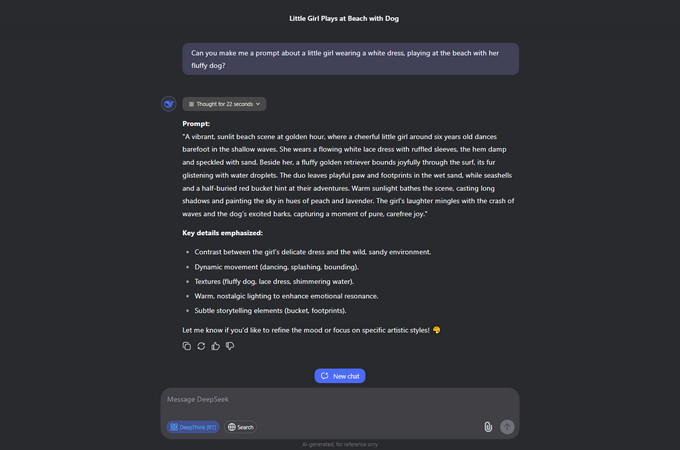
Try this request: “Rewrite my visual brief as one image-generation prompt. Keep the subject, lighting, composition, colors, and 16:9 layout explicit. Include a short negative prompt. Do not add brand names, text inside the image, or details I did not request.” Read the response before copying it. A longer prompt is not automatically better: remove conflicting directions and check that it still reflects your original idea.
For the desk example, a usable output could be: “Editorial illustration of a tidy wooden desk with an open blank notebook and one small green plant, warm morning light from the left, calm cream and sage palette, subject on the right with empty space on the left for a headline, landscape 16:9; no logos, no lettering, no extra hands.” This is a prompt example, not a claim that DeepSeek rendered the image.
3. Generate in a separate image tool
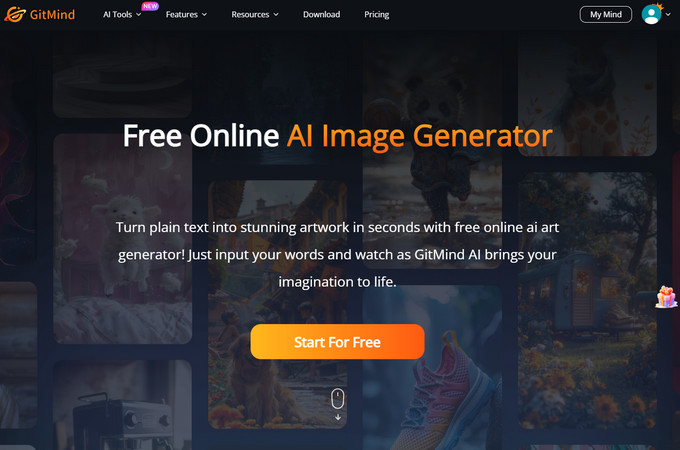
Paste the reviewed prompt into a dedicated image generator. GitMind’s AI Art Generator is one option for personal experiments; its page describes prompt input, size selection, generation, and download. The tool’s available modes, credits, and terms may change, so check the current interface before generating. Do not assume every output can be used commercially.
4. Revise the image, not just the adjectives
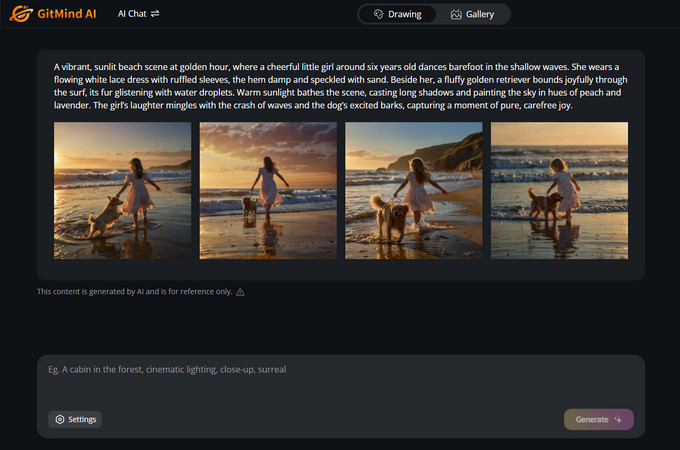
Inspect the actual result at its intended display size. If the headline area is crowded, tell DeepSeek which composition failed and request a revised prompt that moves the subject; then regenerate in the image tool. Check hands, text, factual objects, and any unintended resemblance to a person or brand. Save the final prompt alongside the image so you can reproduce or explain the result.
Usage rights and privacy before you publish
GitMind’s AI Art Generator FAQ currently says its text-to-image outputs are for personal use and are not permitted for commercial purposes. Its AIGC agreement also addresses rights in the inputs and local rules. If your project is commercial, obtain suitable rights or choose a tool whose terms explicitly permit that use before publishing.
Do not upload private client references, confidential designs, or photos of people without permission. Even when an AI tool creates a visual, you remain responsible for checking misleading content, trademarks, and the permissions needed for your use.
Frequently asked questions
Does DeepSeek’s image input feature create pictures?
No. The cited vision documentation describes receiving images for analysis and returning text. Use a separate image generator for an image file unless DeepSeek’s current official product explicitly offers another workflow.
Is DeepSeek free for this workflow?
Account access and limits can change. Prompt drafting may be available through the official chat, while the separate image generator has its own credits or plan. Check both services before starting a large batch.
Can I sell an image made with GitMind’s generator?
Its current AI Art Generator FAQ says generated images are intended for personal use and are not permitted for commercial purposes. Review the latest terms and ask the provider before any commercial use.
What if the first image looks wrong?
Describe the specific mismatch—composition, missing object, colors, or unwanted text—then revise one or two instructions at a time. Compare outputs against the brief, not against how elaborate the prompt sounds.
Takeaway: DeepSeek can help turn a rough idea into a testable visual prompt. A separate tool renders the picture, and that tool’s terms determine how you may use the result.

Leave a Comment