Useful meeting minutes tell someone who was absent what was decided, who owns each next step, and when it is due. Below are 12 copyable structures for Word, Excel, Google Docs, PDF preparation, and visual maps. The original screenshots remain as examples of layouts; they are not downloadable Word, Excel, or PDF files. Copy the fields into your preferred app and adapt them to your team’s rules.

What should meeting minutes include?
For a normal project meeting, record the meeting title, date, attendees, agenda items, decisions, and action items with an owner and due date. Add links to relevant files. Separate facts from open questions: “Decision: launch on 12 June” is different from “Proposal: launch in June.” For a board, committee, or regulated meeting, use the record format required by that organization and check its approval process.
Prepare the agenda before the call. During the meeting, ask the group to confirm unclear decisions and owners. Afterwards, share a draft promptly, gather corrections, and mark the approved version according to your team’s process. Avoid treating an AI transcript as final minutes without review.
12 meeting minutes templates you can copy
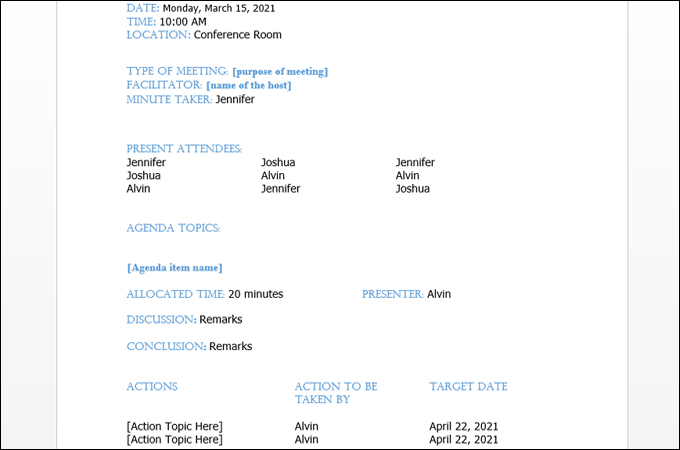
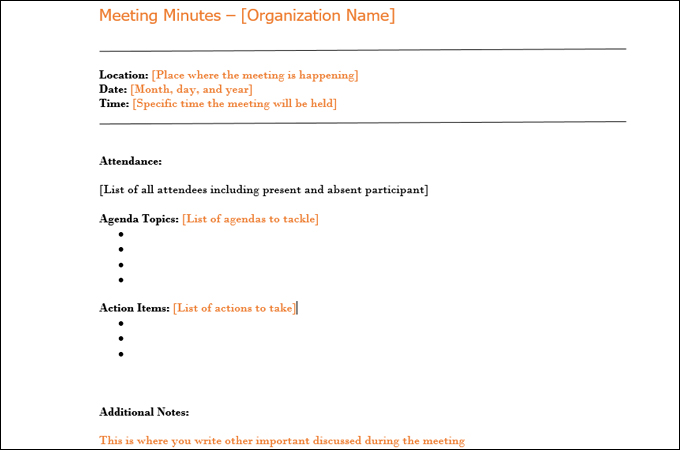
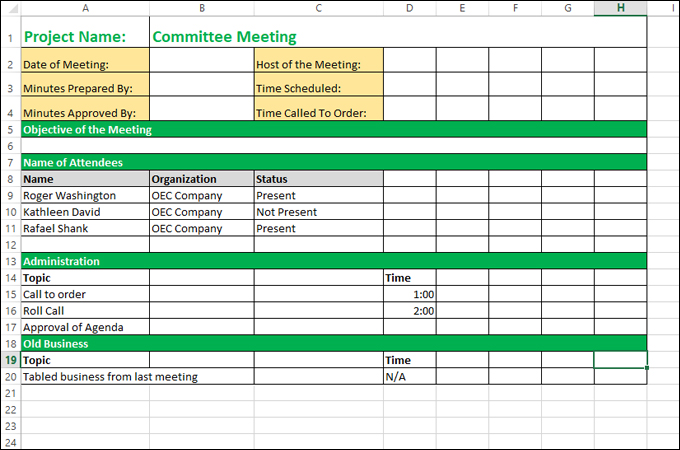
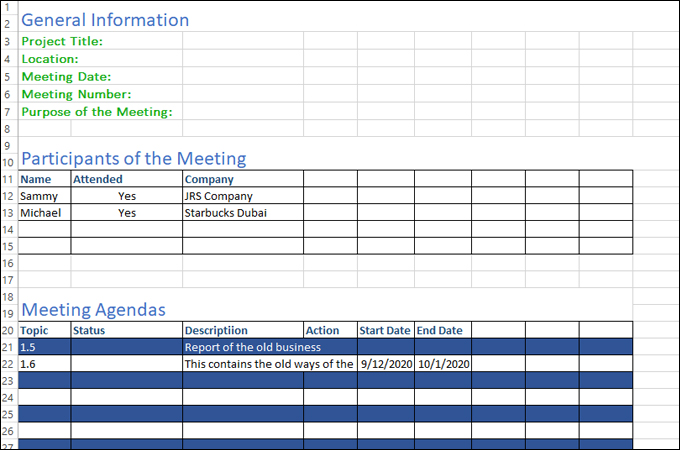
Templates 1–2 work well in Word, 3–4 in Excel, 5–6 in Google Docs, 7–8 as layouts you can export to PDF, and 9–12 as visual maps. The fields are the reusable templates; the screenshots show historical examples of their appearance.
1. Word: simple agenda minutes
Use when the meeting follows a short agenda and needs a readable one-page record.
Meeting: [title]Date/time: [date, start–end, time zone]Present: [names] | Absent: [names]Agenda item 1: [topic]Summary: [one or two factual sentences]Decision: [decision or “none”]Action: [task] — Owner: [name] — Due: [date]Next meeting: [date or TBD]
2. Word: decision log
Choose this format when approvals matter more than discussion detail.
Meeting: [title] | Recorder: [name]Decision ID: [D-01]Question: [what needed deciding]Options considered: [brief list]Decision and rationale: [outcome]Approved by: [name or group, if applicable]Effective date: [date]Follow-up owner / due date: [name / date]
3. Excel: action tracker
Make one row per action so owners can filter their work. Suggested columns:
Meeting date | Agenda item | Action ID | Task | Owner | Due date | Status | Link to evidence
Use a real date cell for deadlines, not a color alone. Add a separate decision sheet if outcomes must be tracked.
4. Excel: recurring meeting register
Useful for weekly operations reviews. Suggested columns:
Meeting ID | Date | Attendees | Issue | Decision | Action owner | Due date | Closed date
Keep one row per issue or decision. Do not overwrite last week’s result; retain an auditable history.
5. Google Docs: collaborative live notes
Assign one recorder and ask other attendees to add corrections as comments rather than rewriting agreed decisions silently.
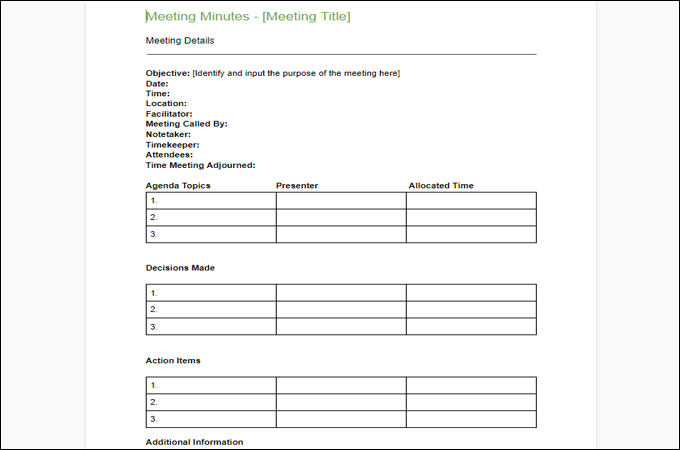
Purpose: [why we met]Attendees: [names]Agenda: [1, 2, 3]Notes by agenda item: [facts only]Decisions: [bullets]Open questions: [question + owner]Actions: [task + owner + date]
6. Google Docs: retrospective minutes
Separate observations from commitments.
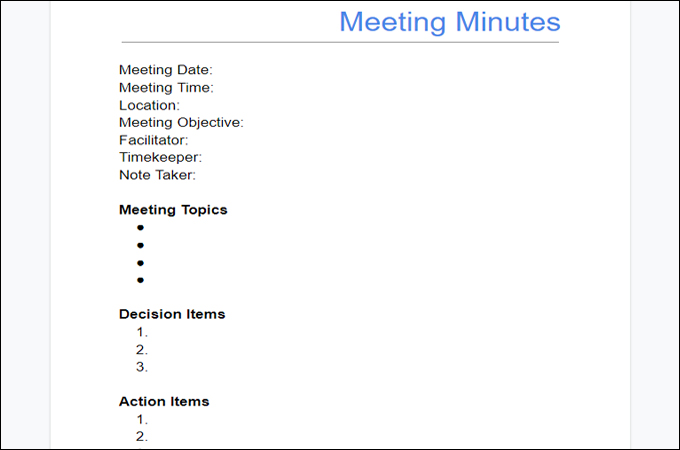
Project and period: [name / dates]What happened: [evidence and observations]What worked: [specific examples]What to change: [specific examples]Decisions: [agreed changes]Experiments: [owner + measure + review date]
7. PDF layout: formal record
Prepare this in an editable document, then export the approved copy to PDF. Formal requirements vary by organization.
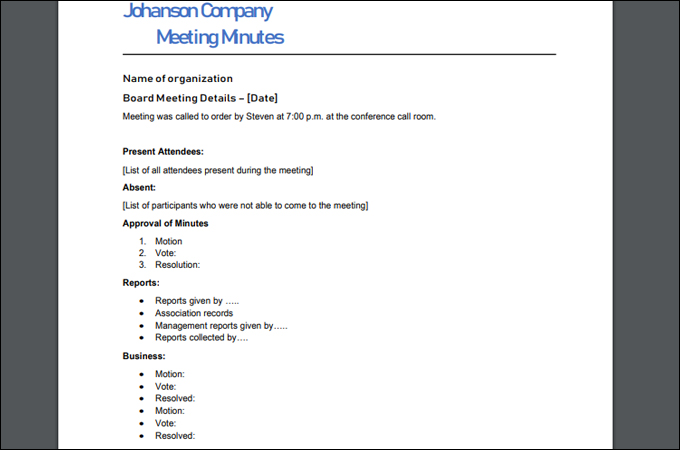
Organization / committee: [name]Meeting date, place, and start time: [details]Members present / absent: [names]Agenda item: [topic]Motion or resolution, if applicable: [exact wording]Outcome: [approved / rejected / deferred]Adjournment: [time]Prepared by / approved on: [names and date]
8. PDF layout: client handoff summary
Export a stable copy once the client confirms the wording.
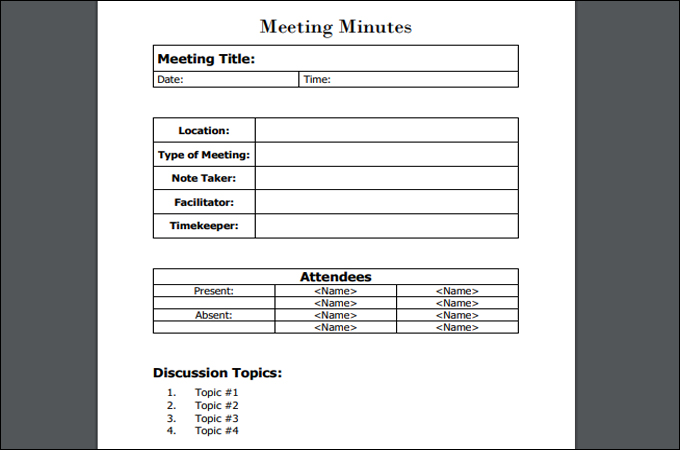
Client / project: [names]Meeting date: [date]Confirmed scope: [deliverables]Decisions: [numbered]Client inputs needed: [item + owner + deadline]Our next steps: [item + owner + deadline]Items awaiting confirmation: [numbered]Version / shared date: [details]
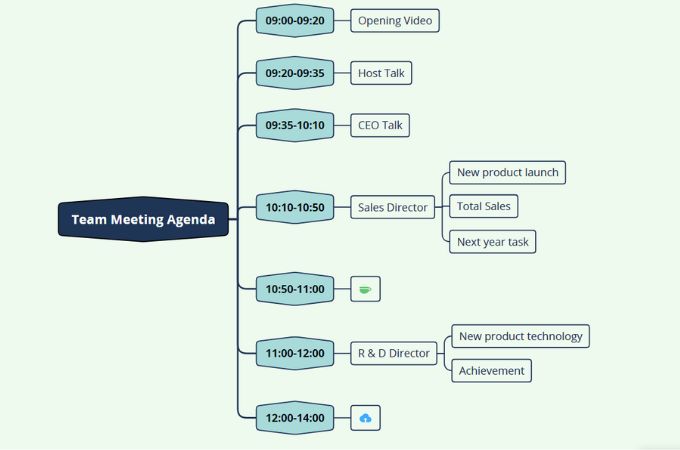
9. GitMind: agenda map
Place the meeting title at the center. First-level branches: goal, agenda, participants, pre-read, and expected decisions. Use it before the meeting so people know what preparation is needed.
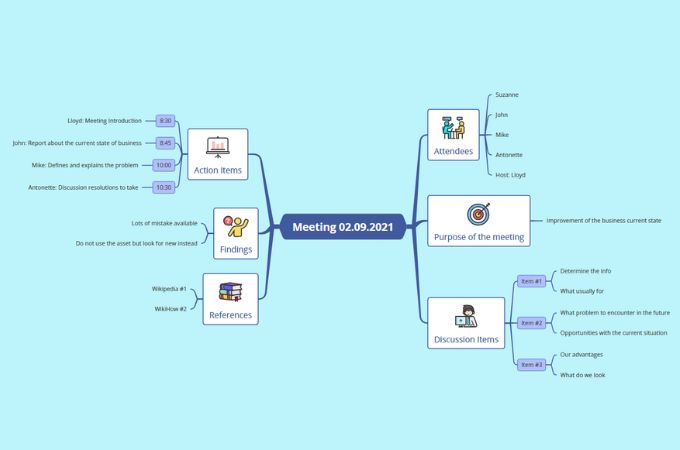
10. GitMind: decisions map
Use a branch per agenda item, with children for options, decision, reason, and owner. After the meeting, convert the confirmed outcome into the written minutes or action tracker.
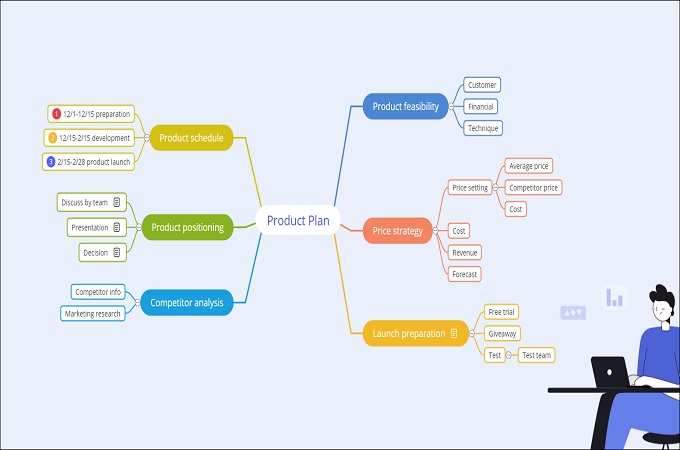
11. GitMind: brainstorming record
Use branches for ideas, questions, evidence, and follow-up. Mark ideas as proposed until the group actually decides; a visual cluster is not a decision on its own.
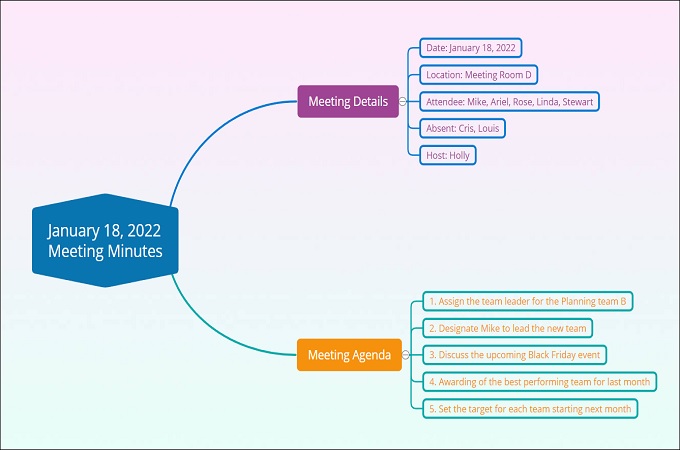
12. GitMind: project follow-up map
Use the project name at the center; branch by workstream. Under each action, include one named owner, one due date, and a status. Keep the map linked to the source minutes so changes have context.
Visual examples can be opened in GitMind if the original public documents are still available: agenda, meeting minutes, notes, and follow-up. Access may require a sign-in or depend on the owner’s sharing settings.
Filled example: 15-minute project check-in
Meeting: Website launch check-in, 12 June, 10:00–10:15. Present: Maya, Leo, Priya. Decision D-01: Move launch to 18 June because the accessibility review is incomplete. Action A-01: Priya completes the review by 14 June. Action A-02: Leo updates the launch page by 16 June. Open question: Maya confirms the email schedule by 13 June. This example distinguishes a confirmed decision, assigned tasks, and an unresolved item.
Frequently asked questions
Are meeting minutes the same as a transcript?
No. Minutes are a concise record of outcomes and assigned work. A transcript captures the conversation; it can help the recorder check details but should be reviewed before sharing.
Who should approve minutes?
Follow your team’s or organization’s process. Routine team notes may be checked by the meeting owner; formal meetings may require a specified approval step.
Should every attendee’s comment be included?
Usually only when needed to understand a decision, obligation, or formally required record. Keep the minutes factual and proportionate to the meeting’s purpose.


Leave a Comment